
Table of Contents
No matter how excellent your product is, if you fail to showcase it, no one is going to consider you in this digital era. And that’s where you need social media marketing. It matters to every business; however, this blog talks especially about social media marketing for interior designers.
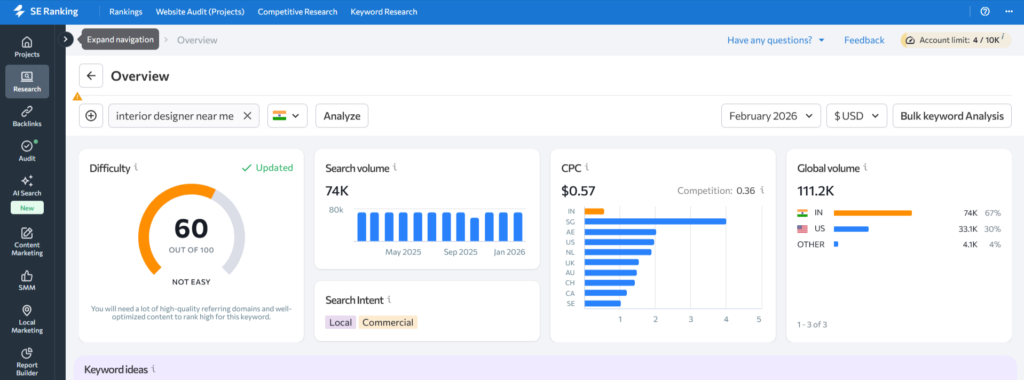
First off, take a look at this SE Ranking screenshot from 2026—it shows around 74k monthly searches in India for the term “interior designer near me.” This clearly highlights that people are actively looking for interior design services. And the best part? The global search volume is even higher, which means the demand is huge. With the right SEO for interior designers and smart social media marketing, you can tap into this demand and attract a large number of potential clients to your business.
This blog explains everything you need to know about social media marketing for interior designers. It helps you know everything, like what it is, why it’s important, the way to choose platforms, create content, posting time, and more, enabling you to get your brand go digital.
What Is Social Media Marketing for Interior Designers?
Social media marketing for interior designers refers to the strategic, visual approach to building brand awareness, showcasing portfolios, and attracting potential clients through platforms like Instagram, Pinterest, Facebook, and more. It involves sharing curated, high-quality images and behind-the-scenes content, helping brands establish authority, foster trust, and turn followers into potential, paying clients.
Key Aspects of Social Media Marketing for Designers
- Visual Portfolio & Brand Building: Instagram and Pinterest act as digital portfolios where interior designers showcase their unique style and expertise. Bear in mind that consistent, curated, and high-quality imagery is essential to establishing brand authority.
- Targeted Content Strategy: Rather than just posting generic content, effective social media marketing defines a target audience and uses tailored content, such as design tips, project reveals, and process insights, to attract specific, high-paying clients.
- Building Trust & Authority: Through consistent posting and engagement (comments, DM, stories), interior designers foster an emotional connection and establish themselves as experts, which increases their perceived value.
- Driving Traffic and Leads: Using platforms as a “conversion ecosystem” ensures that social media posts directly lead to website visits, inquiries, and ultimately, new project bookings.
Why Is Social Media Marketing for Interior Designers Important?
Social media marketing for interior designers is important for increasing visibility, showcasing expertise & style, building a brand, and engaging directly with clients. There are 5.66 billion active “social media user identities” at a worldwide level, which equates to 68.7 percent of the total global population. Therefore, you, just by being part of the conversation (for example, posting content that people can relate to, like, and share), can get your brand in the public domain. It will not only help you build a brand but also open up new opportunities to reach potential clients.
Increase Visibility
Social media platforms, such as Facebook, Instagram, X, and many more, help interior designers reach a wider audience beyond word-of-mouth referrals. Potential clients actively browse these platforms for design inspiration. A consistent posting strategy ensures your work appears in front of users who are already interested in interior design, making discovery easier and more organic.
Showcase Expertise & Style
Social media acts as a digital portfolio where interior designers can highlight completed projects, design concepts, and unique aesthetics. By sharing before-and-after images, mood boards, and design walkthroughs, these professionals can clearly communicate their expertise, creative vision, and specialization, helping clients decide if the style aligns with their needs.
Build Brand Identity
Through consistent visuals, tone, and messaging, social media marketing helps interior designers build a recognizable brand identity. Whether positioning yourself as a luxury, minimalist, or budget-friendly interior design company, regular content creation and posting reinforce your niche. As time passes by, this consistency builds authority, trust, and a strong professional image in the market, separating you from the crowd.
Engage Directly with Clients
Social media marketing enables direct interaction with potential and existing clients through comments, messages, polls, and live sessions. This real-time communication helps you understand and answer those queries quickly, know client preferences, and build relationships. What’s more, active engagement with clients also increases trust and makes your brand feel more approachable and client-focused.
How to Conduct Social Media Marketing for Interior Designers?
Starting from choosing the right platform to creating content strategies, deciding on paid social media advertising, and more, social media marketing includes many steps. Here’s all about the steps on how to conduct social media marketing for interior designers to help you capitalize on your initiative:
Choosing the Right Platforms
Not all social media platforms serve the same purpose for interior designers; therefore, choosing the right ones depends on your target audience, content style, and business goals. Interior designers should focus on choosing social media platforms where visual storytelling and client engagement are strongest to help maximize impact and avoid wasted effort.
Instagram is one of the most powerful platforms when it comes to social media marketing for interior designers, thanks to its visual-first nature. Posting high-quality photos, Reels, and carousel posts allows designers to showcase completed projects, transformations, and design details. What’s more, you should use relevant hashtags and location tags to improve discoverability and attract local clients actively searching for design inspiration.
Pinterest functions as a visual search engine where people actively look for interior design ideas and inspiration. You can use this platform to create boards based on project styles, room types, or themes that help organize your work effectively. Moreover, pinning images that link back to your website can help you drive long-term traffic and generate consistent leads over time.
When it comes to social media marketing for interior designers, Facebook is ideal for building long-term relationships and local visibility. Interior designers can use this platform to create business pages or groups to share updates, projects, and design tips. What’s more, its advanced advertising tools allow you to run highly targeted local ads, making it effective for reaching homeowners in specific locations, like Ahmedabad, Delhi, Mumbai, or wherever you think your target customers are.
Next up, LinkedIn is one of the best-suited social media platforms for professional networking and B2B opportunities. Here, interior designers can connect with contractors, architects, suppliers, and corporate clients. You can leverage the potential of this platform by creating and sharing articles, project case studies, and industry insights that help you build credibility, authority, and trust, especially for commercial and high-value interior design projects.
TikTok & YouTube
TikTok and YouTube are powerful platforms for video-based storytelling and informational content. Using these platforms, interior designers can share design tips, tutorials, site visits, and behind-the-scenes content to engage audiences. Short, engaging videos on TikTok can go viral quickly, while YouTube helps establish long-term authority through detailed visual content, helping you grow your business.
Building Content Strategies for Interior Designers
A well-defined content strategy helps interior designers attract, educate, and convert followers into clients. Instead of posting randomly, interior designers should focus on content that highlights expertise, builds trust, and inspires target audiences. Moreover, visual storytelling combined with informative captions creates a balance between creativity and value-driven marketing.
Portfolio Showcases
Sharing completed projects on social media allows interior designers to present their best work to potential clients. You can choose high-quality images, detailed captions, and clear descriptions of design concepts to help viewers understand your approach to interior design. What’s more, consider regular portfolio posts that reinforce credibility and act as a visual proof of your skills and experience.
Before-and-After Transformations
Next up, before-and-after content is highly engaging because it visually demonstrates the impact of professional interior design. You should utilize these transformations, as they help you highlight problem-solving abilities, creativity, and attention to detail. Such posts often receive higher engagement, as audiences enjoy seeing dramatic improvements and real-life design success stories.
Posting these on social media gives a kind of assurance to your potential clients about their ROI of investing in interior design.
Design Tips & Tricks
Posting practical design tips allows interior designers to position themselves as experts rather than just service providers. Simple advice on color selection, space planning, or decor styling adds value to followers. These educational, more informative contents build trust and keep audiences engaged even when they are not immediately ready to hire your services.
Client Testimonials & Case Studies
Client testimonials and project case studies build social proof and credibility. Showcasing client testimonials and case studies acts as powerful social proof, boosting brand credibility, increasing conversion rates by up to 58%, and accelerating B2B sales cycles.
Sharing client feedback, project challenges, and outcomes of your interior design services reassures potential clients about your professionalism and the results they are going to get. These posts help reduce hesitation and encourage inquiries from people considering interior design services.
Behind-the-Scenes Content
Behind-the-scenes posts humanize your brand by showing the design process, site visits, material selection, or mood board creation. This type of content fosters transparency and relatability, helping audiences connect with your brand personally while understanding the effort and expertise behind every finished project. It helps them understand the original value of the efforts you put into bringing the results to clients.
Defining Engagement Tactics for Interior Design Social Media Marketing
Engagement is essential for building relationships and improving visibility of your interior design services on social media platforms. Actively interacting with followers signals authenticity and trust. Interior designers who prioritize engagement often see higher reach, better audience loyalty, and stronger client relationships over time. Here’s how you can ensure better engagement and better outcomes of your social media marketing initiative:
Interactive Posts
Have you ever felt yourself getting unintentionally dragged towards answering a quiz? Yes, and the same goes for others as well. Polls, quizzes, and design preference questions encourage followers to interact with your content. You can opt for asking audiences to choose between color schemes or layouts, which increases engagement while providing insights into client preferences.
Stories, Reels & Short Videos
Stories and short-form videos help interior designers stay visible to target customers on a daily basis. You can choose reels and stories that are ideal for sharing quick tips, progress updates, or daily work moments. These formats feel informal and personal, making your brand more approachable and memorable for potential customers.
Live Sessions & Q&A
With live sessions, interior designers are able to directly address audience questions and concerns in real time. Moreover, hosting Q&A sessions or live walkthroughs builds trust and authority for your brand. It also helps potential clients understand your expertise and communication style before reaching out for interior design services.
Collaborations & Partnerships
Collaborating with architects, furniture brands, or influencers expands your reach to new audiences. Strategic partnerships help interior design companies gain credibility and exposure while creating fresh, engaging content. What’s more, collaborations also strengthen industry relationships and open doors to new business opportunities.
Considering Paid Social Media Advertising
Paid social media advertising is highly effective for brand awareness and lead generation, with average conversion rates of 1-2%, though top campaigns can exceed 3%.
Paid advertising helps interior designers reach highly targeted audiences faster than organic content alone. Platforms like Instagram and Facebook allow designers to showcase portfolios directly to homeowners based on location, interests, and demographics, making ads cost-effective and results-driven.
There are many types of ads that interior designers can use, such as carousel ads, video ads, and retargeting campaigns, to convert website visitors into leads and then potential and repeatable customers. Tracking performance and optimizing campaigns ensures better ROI and consistent lead generation.
Leveraging Analytics & Performance Tracking
Last but not least! No matter how much you put into social media marketing, if you fail to track the performance, you also fail to move in the right direction. Tracking performance helps interior designers understand what content works best.
Metrics such as engagement rate, reach, saves, and website clicks provide valuable insights. Using platform analytics and tools like Google Analytics and analytics in YouTube allows designers to refine strategies and focus on content that delivers results.
Here’s how you can make use of performance analytics for performance and business improvement:
- Track Post Engagement: Monitor likes, comments, shares, and saves to see which designs resonate most.
- Measure Reach & Impressions: Understand how many people are seeing your content to gauge visibility.
- Monitor Website Clicks: Track which social posts drive visitors to your portfolio or contact page.
- Analyze Follower Growth: Observe trends in follower increase or decrease to measure audience interest.
- Assess Story & Reel Performance: Check completion rates and engagement for short-form content.
- Identify Best Posting Times: Use analytics to discover when your audience is most active.
- Compare Content Types: Evaluate which formats, like photos, carousels, and videos, perform better.
- Track Hashtag Performance: Find which hashtags attract the right audience and improve discovery.
- Monitor Competitor Performance: Benchmark against other interior designers to spot trends and gaps.
Common Social Media Mistakes Interior Designers Should Avoid
Inconsistent posting, poor-quality visuals, overly promoting content, and many more are the common social media mistakes interior designers should avoid. Here’s how they affect and what you can do to avoid those mistakes:
- Inconsistent Posting: Irregular updates make your brand forgettable and reduce audience engagement.
- Poor-Quality Visuals: Low-resolution images or cluttered photos can harm your professional image.
- Overly Promotional Content: Constantly selling services turns followers off; balance with value-driven posts.
- Ignoring Comments & Messages: Not responding to audience interactions reduces trust and client engagement.
- Copying Competitors: Imitating others instead of showing your unique style hurts brand identity.
- Neglecting Hashtags & SEO: Using irrelevant or no hashtags limits content discoverability.
- Ignoring Analytics: Without tracking performance, it’s hard to know what works or improve results.
- Skipping Storytelling: Only posting images without context fails to emotionally connect with the audience.
- Overcomplicating Posts: Busy layouts or confusing captions can overwhelm viewers.
- Neglecting Platform Differences: Posting the same content across all platforms may reduce effectiveness.
Conclusion
The role of social media is crucial for visibility, credibility, and client acquisition in businesses today. Conducting social media marketing, interior designers can grab a huge volume of traffic, potential customers, and thereby, giving a boost to their businesses.
Now that you’ve come to know everything, get in touch with the right partner and bring your business to the public domain for better growth.