Table of Contents
Simply offering great rooms and amenities is crucial, however, not enough to attract guests to hotels. Travelers rely heavily on trust, reputation, and online perception before making a booking decision. This is where public relations (PR) plays a crucial role.
Unlike traditional advertising, public relations for startups and established hotels focuses on building credibility through media coverage, storytelling, influencer collaborations, and guest experiences that people genuinely talk about.
For hotels, effective PR is not just about visibility; it’s about shaping how your brand is perceived in the minds of potential guests. A well-executed PR strategy can position your hotel as a desirable destination, create emotional connections with travelers, and ultimately drive more direct bookings.
Whether you’re a boutique hotel or a global chain, leveraging PR can help you stand out in a crowded market and reduce reliance on third-party booking platforms.
This blog explains everything you need to know about PR for hotels, enabling you to know and execute it for your hotel business for better visibility and growth.
What Is Public Relations for Hotels?
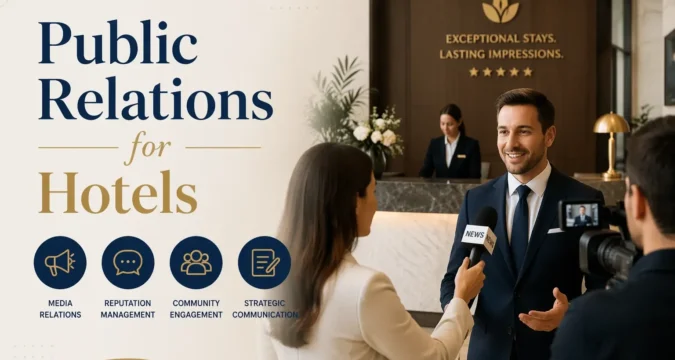
Public Relations (PR) for hotels is the strategic management of a hotel’s image and reputation. It aims at building trust with guests and stakeholders through earned media rather than paid advertising.
Hotel public relations shapes public perception through storytelling, influencer partnerships, crisis communication, and media relations to increase visibility and drive bookings.
Key Aspects of Hotel Public Relations
- Reputation & Crisis Management: Proactively managing online reviews and creating communication plans to mitigate negative publicity, such as safety concerns or service failures.
- Media Relations: Building relationships with journalists, bloggers, and travel editors. It secures feature articles, reviews, and mentions in reputable publications.
- Influencer & Social Media PR: Making use of Instagram, TikTok, and LinkedIn to showcase hotel experiences via third-party influencers, increasing authentic reach.
- Brand Storytelling: Communicating unique selling points, such as sustainability initiatives, local community involvement, or unique amenities, to differentiate from competitors.
- Event & Launch PR: Hosting events and press trips to engage media and influencers directly, offering firsthand experiences
Benefits of Public Relations for Hotels
PR boosts hotel bookings and revenue by increasing brand visibility, building trust through media coverage and driving traffic to your website. It strengthens reputation management, influences guest decisions, and fosters loyalty, providing a cost-effective alternative to traditional advertising.
PR bridges the gap between potential guests and the property’s unique value. Here are the benefits you can expect by conducting hotel PR:
- Increased Brand Visibility & Awareness: PR for hotels generates media coverage and features in travel publications, and boosts brand recognition more effectively than ads.
- Reputation Management & Crisis Control: Proactive PR (including social listening) builds a positive reputation, thereby mitigating damage during negative events or crises.
- Trust and Credibility Building: Through third-party validation, for an instance, editorial coverage, and influencers, PR makes potential guests more likely to trust the brand.
- Improved SEO and Digital Presence: PR helps in SEO and link building to improve search engine rankings, directing more traffic to the hotel website.
- Influencing Booking Decisions: Targeted storytelling backed by PR for hotels aligns the hotel’s unique value proposition with audience needs. It turns prospects into guests.
- Community and Stakeholder Engagement: PR fosters relationships with the local community, partners, and employees, thereby enhancing the brand’s image.
Top 5 PR Strategies for Hotels
Public relations for hotels is not just about visibility, it’s about shaping perception, building trust, and influencing booking decisions. For hotels, the right PR strategies are more likely to turn a property into a sought-after destination.
Below are the most effective PR strategies for hotels, explained in a practical, actionable way.
- Media Relations & Press Coverage
Media coverage is one of the most powerful ways to build credibility. When your hotel is featured in travel magazines, blogs, or news portals, it carries far more weight than paid advertising because it’s perceived as unbiased.
Hotels should actively build relationships with journalists, travel writers, and editors. Instead of generic pitches, offer compelling angles, such as a unique architectural design, sustainability initiatives, or a one-of-a-kind guest experience.
Press releases play a critical role here. Whether you’re launching a new hotel, renovating rooms, or hosting a major event, a well-crafted press release ensures your story reaches the right audience. Distribution through credible platforms and targeted outreach can lead to valuable media mentions that directly influence travelers researching stays.
- Influencer & Travel Blogger Collaborations
Influencer marketing has become a core PR pillar in hospitality because travelers trust real experiences over brand claims. Collaborating with travel influencers and bloggers allows hotels to showcase authentic stays through engaging content like videos, reels, and blogs.
The key is choosing influencers whose audience aligns with your target guests: luxury travelers, backpackers, couples, or business professionals. Micro-influencers, in particular, often deliver higher engagement and trust.
Beyond influencer partnerships, user-generated content is equally valuable. Encouraging guests to share their experiences on social media creates a continuous stream of organic promotion. Reposting guest content not only builds trust but also strengthens community engagement around your brand.
- Storytelling & Brand Positioning
In a crowded marketplace, features alone don’t sell; stories do. Effective PR for hotels focuses on crafting a compelling narrative that differentiates your hotel from competitors.
This could be a heritage property with a rich history, a luxury resort offering personalized experiences, or an eco-friendly hotel committed to sustainability. The goal is to communicate not just what you offer, but why it matters.
Strong storytelling creates emotional connections. When potential guests can imagine themselves experiencing your hotel, whether it’s a peaceful retreat or a vibrant cultural stay, they are far more likely to book. Consistency across all channels, including website, social media, and press coverage, is essential to reinforce this positioning.
- Event-Based PR
Events are a powerful way to generate buzz and attract attention. Hotels can host weddings, corporate conferences, product launches, or cultural events to showcase their spaces and services.
Each event becomes an opportunity for PR exposure. Inviting media, influencers, and industry professionals is more likely to amplify reach and lead to valuable coverage. Even smaller events, if executed well, can create shareable moments that spread across social media.
Additionally, events allow potential customers to experience the hotel firsthand, making them more likely to consider it for future stays or bookings.
- Crisis Management PR
No hotel is immune to challenges; negative reviews, service issues, or unexpected crises can quickly impact reputation. What matters is how effectively you can handle these situations.
Crisis management PR focuses on transparency, speed, and professionalism. Hotels should respond promptly to negative feedback, acknowledge issues, and offer solutions rather than ignoring or deleting complaints. This demonstrates accountability and builds trust.
During larger crises, such as service disruptions or external events, clear and consistent communication is crucial. Keeping guests informed and reassured can prevent panic and protect brand reputation.
Handled correctly, even a negative situation can strengthen credibility, showing that your hotel values customer experience and takes responsibility seriously.
Tools Used in Hotel PR
Effective hotel PR relies on the right mix of tools to monitor brand perception, manage communication, and measure impact. These tools help streamline efforts and ensure your PR strategy is data-driven rather than guesswork.
- Media Monitoring Tools: Platforms like Meltwater and Cision track where and how your hotel is mentioned across news outlets, blogs, and online publications, helping you evaluate coverage and spot opportunities.
- Social Listening Tools: Tools such as Hootsuite and Brandwatch allow hotels to monitor conversations, hashtags, and guest sentiment across social media. This, in turn, helps quick responses and trend tracking.
- Online Reputation Management Platforms: Platforms like ReviewPro and TrustYou help you manage and respond to reviews across multiple channels, and foster a consistent and professional brand image.
- Press Release Distribution Services: Services such as PR Newswire and Business Wire allow hotels to distribute announcements to journalists and media outlets at scale.
- Analytics & Tracking Tools: Using tools like Google Analytics and SEMrush, businesses can track website traffic, referral sources, and keyword performance, connecting PR efforts with actual booking behavior.
How to Measure PR Success for Hotels
PR success is not just about visibility; it’s about tangible business outcomes. Hotels should focus on metrics that connect PR efforts directly to growth and bookings. Here’s all about how to measure PR success for hotels:
Media Coverage & Reach
One of the ways to measure PR success of hotels is tracking media coverage & reach. Track the number of press mentions, quality of publications, and estimated audience reach to understand brand exposure.
Website Traffic from PR Sources
Gauging the traffic increase of your website from PR sources is how you measure success. Monitor referral traffic from media articles, blogs, and press releases to see how PR drives visitors to your site.
Direct Bookings Growth
If you experience direct booking growth, it may be a sign that your PR strategy is working. One of the most important indicators, effective PR should increase bookings made directly through your website rather than third-party platforms.
Online Sentiment & Reviews
What’s more, online sentiment & reviews is the way to measure your hotel PR success. Analyze guest feedback and ratings to measure improvements in brand perception over time.
Social Media Engagement
Metrics like shares, comments, mentions, and follower growth reflect how well your PR campaigns resonate with audiences. Therefore, measure social media engagement.
Return on Investment (ROI)
Compare PR costs with revenue generated from increased bookings and brand visibility to assess overall effectiveness. It helps you know if your PR initiative brings success and profit or if you need more improvement.
Common PR Challenges in the Hotel Industry
Despite its benefits, hotel PR comes with its own set of challenges that require strategic handling. Here are the common PR challenges for hotels, including high market competition, dependence on OTAs, managing negative reviews, and more:
- High Market Competition: With countless hotels competing for attention, standing out in media and online platforms becomes increasingly difficult.
- Dependence on OTAs: Heavy reliance on booking platforms is more likely to limit direct engagement with customers, making it harder to build brand loyalty.
- Managing Negative Reviews: A few negative reviews on platforms like Tripadvisor or Google Reviews can significantly impact reputation if not handled properly.
- Maintaining Consistent Brand Image: Ensuring consistent messaging across multiple channels, locations, and audiences can be challenging, especially for hotel chains.
- Crisis Situations: Unexpected events such as service failures, natural disruptions, or public complaints require immediate and strategic communication.
- Measuring PR Impact Accurately: Unlike paid marketing, PR results are often indirect, making it harder to attribute success to specific campaigns.
Best Practices for Effective Hotel PR
To maximize results, hotels should follow proven PR best practices that align strategy with execution. It includes focusing on storytelling, building long-term media relationships, using guest-generated content, and more. Here’s how:
- Focus on Storytelling, Not Promotion: Instead of just advertising services, highlight unique experiences, guest stories, and brand values to create emotional connections.
- Build Long-Term Media Relationships: Consistent engagement with journalists and influencers leads to better coverage opportunities over time.
- Leverage Guest-Generated Content: Encourage guests to share their experiences and showcase this content to build authenticity and trust.
- Be Proactive with Reputation Management: Respond quickly and professionally to all reviews, positive or negative, to demonstrate commitment to guest satisfaction.
- Integrate PR with Digital Marketing: Align PR efforts with SEO, content marketing, and social media to amplify reach and impact.
- Use Data to Guide Strategy: Regularly analyze performance metrics and adjust campaigns based on insights rather than assumptions.
- Maintain Consistency Across Channels: Ensure that your brand voice, messaging, and visuals remain uniform across media coverage, website, and social platforms.
Real-World Example of Successful Hotel PR: Marriott International
Marriott International transformed its PR strategy by shifting from traditional promotions to content-led storytelling through its platform, Marriott Bonvoy Traveler. Instead of directly advertising rooms, Marriott focused on publishing high-quality travel content, destination guides, and lifestyle stories.
PR Strategy:
- Created a digital content hub that acts like a travel magazine
- Published SEO-driven articles targeting traveler intent
- Promoted stories through media outreach and social channels
- Integrated subtle brand messaging within valuable content
- Collaborated with writers, influencers, and local experts
Results & Impact:
- Massive increase in organic traffic and brand visibility
- Stronger engagement with travelers at the inspiration stage
- Improved brand authority in the travel space
- Increased direct bookings by influencing decision-making early in the journey
- 90% of readers desired to take action with Marriott
- 80% agree Marriott offers an inclusive environment
Why This Worked:
This campaign succeeded because it didn’t sell rooms; it sold experiences and inspiration. By positioning itself as a trusted travel resource, Marriott built credibility and stayed top-of-mind when users were ready to book.
Conclusion
Public relations is an essential growth driver for hotels looking to increase bookings and build long-term brand value. From securing media coverage and collaborating with influencers to managing online reputation and handling crises, PR touches every aspect of how a hotel is perceived by its audience.
The most successful hotels understand that PR is not a one-time effort but an ongoing process of storytelling, engagement, and relationship-building. By consistently delivering positive experiences and communicating them effectively, hotels can earn trust, enhance visibility, and create a strong brand presence that attracts guests organically.
In the end, a strategic approach to PR doesn’t just fill rooms, it builds a reputation that keeps guests coming back and recommending your hotel to others.
FAQs
How does PR help hotels increase bookings?
PR for hotels builds trust and visibility through media mentions, reviews, and word-of-mouth. A strong reputation encourages travelers to choose your hotel over competitors, leading to more direct bookings.
What is the difference between hotel PR and hotel marketing?
Hotel marketing promotes services through paid channels like ads, while PR focuses on earned media, credibility, and brand reputation through press coverage, storytelling, and public perception.
Why is online reputation important for hotel PR?
Online reviews on platforms like Tripadvisor and Google Reviews directly influence booking decisions. Positive ratings build trust, while negative feedback can significantly impact occupancy rates.
How can hotels use influencers for PR?
Hotels can collaborate with travel influencers and bloggers to showcase authentic experiences, generate social media buzz, and reach new audiences through engaging visual and storytelling content.
What are the most effective PR strategies for hotels?
Key strategies for PR for hotels include media outreach, influencer collaborations, storytelling, hosting events, and managing online reputation to create consistent brand visibility and credibility.
How do hotels handle negative reviews through PR?
Hotels should respond professionally, acknowledge issues, offer solutions, and show transparency. Effective crisis communication can turn negative experiences into trust-building opportunities.
Can small hotels benefit from PR?
Yes, even small or boutique hotels can use PR effectively by focusing on niche storytelling, local media coverage, and partnerships with micro-influencers to build visibility and credibility.
How do you measure the success of hotel PR campaigns?
Success of hotel PR campaigns is measured through metrics like media coverage, website traffic, social engagement, online reviews, and most importantly, an increase in direct bookings.
What role does social media play in hotel PR?
Social media helps hotels engage directly with guests, share experiences, and amplify PR campaigns through visuals, stories, and user-generated content.
Is PR better than online travel agencies (OTAs) for bookings?
PR is not a replacement for OTAs, however, it helps reduce dependency on them by building a strong brand that drives more direct bookings through trust and awareness.