Table of Contents
Public Relations (PR) plays a crucial role in shaping how a brand is perceived by the public. It helps businesses build credibility, manage their reputation, and communicate effectively with their target audience. Traditionally, PR relied on offline channels such as newspapers, magazines, television, and events to spread brand messages and gain media coverage.
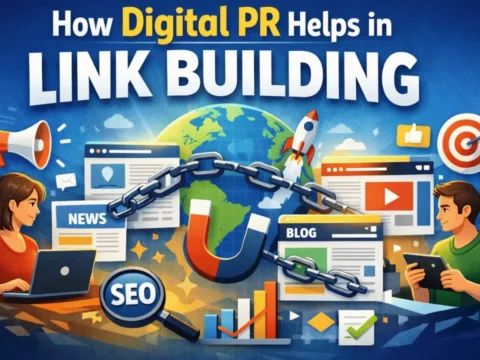
However, with the rise of the internet and social media, Digital PR has emerged as a powerful alternative that focuses on online visibility, engagement, and measurable results. It boosts backlinks, which is important, as research shows that those rankings first in the SERP have around 3.8 times more backlinks than those in positions 2-10.
However, today, businesses often face the question: Should they invest in Traditional PR or Digital PR?
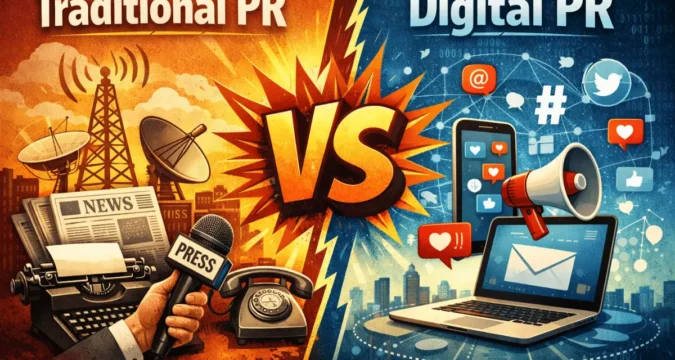
While both approaches aim to enhance brand awareness and reputation, they differ significantly in terms of reach, speed, cost, engagement, and measurement. Understanding these differences is important for choosing the right strategy for your brand.
This blog explores Traditional PR vs Digital PR, compares their key differences, discusses when to choose each approach, and helps you understand how both can work together to create a stronger and more effective PR strategy. Explore more!
What Is Traditional PR?
Traditional Public Relations (PR) refers to the conventional methods of managing a brand’s image, reputation, and communication with the public, utilizing offline channels. It helps build relationships with the media, stakeholders, and the general public through credible and widely recognized platforms.
Traditional PR often emphasizes authority, trust, and long-term reputation management rather than instant engagement.
Examples of Traditional PR Involve:
- Newspapers & Magazines: Press releases, feature articles, and interviews in print media help reach local or national audiences.
- Television & Radio: Broadcast news, interviews, and sponsored programs ensure mass visibility.
- Press Releases: Official announcements shared with journalists work best to generate media coverage.
- Events: Conferences, product launches, and public events allow a direct connection with audiences and influencers.
Key Objectives of Traditional PR:
- Brand Awareness: Making sure the public knows about the company, product, or service.
- Reputation Management: Maintaining a positive image and handling any negative publicity carefully. For example, reputation management for doctors, lawyers, and more.
- Media Coverage: Securing mentions and features in credible media outlets to gain trust and visibility.
Traditional PR works best when credibility and authority are the primary goals, especially for those industries where trust is crucial, like finance, healthcare, and government.
What Is Digital PR?
Digital PR is the modern evolution of traditional PR that focuses on online platforms to promote a brand, improve its digital presence, and connect with a global audience. Unlike traditional PR, digital PR emphasizes measurable engagement, real-time interaction, and leveraging digital channels such as websites, blogs, social media, and online publications.
Digital PR is closely tied with content marketing and SEO strategies to enhance online visibility and image or a brand.
Examples of Digital PR Include:
- Online Press Releases & News Coverage: Sending press releases to online news portals, digital magazines, and media websites to gain coverage.
- Media Outreach to Online Publications: Pitching story ideas to journalists, bloggers, and online editors.
- Digital Media Mentions & Features: Getting your brand mentioned in online publications, interviews, or expert roundups.
- Link Building Through PR Campaigns: Creating stories, reports, or campaigns that journalists link to from their websites.
Key Objectives of Digital PR:
- Online Visibility: Ensuring the brand is easily discoverable on search engines and social media.
- Engagement: Encouraging likes, shares, comments, and interactions with the target audience.
- Backlinks & SEO Value: Generating links from reputable websites to boost website authority.
- Website Traffic & Conversions: Driving potential customers to take action on your website.
Digital PR works exceptionally well for startups, e-commerce brands, tech companies, and any business that wants to build a measurable online presence.
Key Differences Between Traditional and Digital PR
When comparing traditional PR vs digital PR, you can find several differences between these two. These two may differ based on medium, target audience, reach, cost, and more. Look at the table below and then the detailed explanation differentiating these two on different criteria to have a clear picture:
| Aspect | Traditional PR | Digital PR |
| Medium | Print, TV, radio, events | Online platforms, social media, blogs, websites |
| Target Audience | Broad, often mass-market | Highly targeted, niche-specific |
| Reach | Local or national | Global, can be instant |
| Cost | High (ad space, event costs, media fees) | Usually lower, flexible budgets |
| Measurability | Hard to measure ROI | Easy to track metrics (traffic, engagement, conversions) |
| Speed | Slower (publication cycles, event planning) | Fast, real-time updates possible |
| Location & Engagement | Limited, one-way communication | High, two-way interaction with the audience |
| Credibility & Trust | High, often backed by established media | Growing, but depends on influencer or source credibility |
| Content Format | Formal, structured, less frequent | Flexible, interactive, can be multimedia-rich |
| Longevity | Often long-lasting (magazine articles, TV coverage) | Can be short-lived unless continually promoted online |
- Medium
Traditional PR relies on offline channels such as newspapers, TV, radio, and events. These are authoritative but limited to where the medium reaches. Digital PR, on the other hand, leverages online channels, like websites, blogs, social media, and online news portals. These allow a brand to appear wherever the internet exists.
- Target Audience
Traditional PR and digital PR also differ in terms of target audience. While traditional PR targets a broad audience, often mass-market, without much customization, digital PR can be laser-focused on niche groups using demographics, interests, and behavior.
- Reach
Reach also differentiates traditional PR from digital PR. Traditional PR is usually limited to local or national boundaries. Digital PR, on the other hand, can reach a global audience instantly, breaking geographical barriers.
- Cost
The cost you have to bear is different based on whether you choose traditional PR or digital PR. Traditional PR requires high costs due to printing, broadcast fees, or event expenses.
On the other hand, digital PR is generally more affordable; campaigns can scale up or down based on budget.
- Measurability
Traditional PR is difficult to measure precise ROI as the impact is often estimated via circulation or audience size. With digital PR, it is easy to track engagement, clicks, traffic, conversions, and ROI using analytics tools.
- Speed
Digital PR and traditional PR are different in terms of speed as well. While traditional PR is slow due to lead times for publications or event planning, digital PR comes with fast execution, with instant publication and rapid audience reach.
- Interaction & Engagement
Interaction and engagement also differentiate traditional PR from digital PR. Traditional PR is mostly one-way communication in which audience feedback is indirect or delayed. In contrast to traditional PR, digital PR encourages direct interaction through comments, shares, and real-time responses.
- Credibility & Trust
Traditional PR ensures high credibility. This is because messages come through trusted media outlets. With digital PR, however, credibility depends on the platform, influencer, or publication where fake news or spam can reduce trust.
- Content Format
Content format also creates a difference between traditional PR and digital PR. Traditional PR is formal, structured, and less frequent; often textual or broadcast-based.
Digital PR, on the other hand, comes with flexible content, including blogs, videos, infographics, and podcasts, optimized for shareability.
- Longevity
Last but not least! Traditional PR is different from digital PR in terms of longevity. That is because traditional PR coverage, such as magazine features or TV interviews, can have a long-lasting impression.
In contrast to traditional PR, with digital PR, content can go viral but may be short-lived; it requires continuous promotion to maintain relevance.
Traditional Vs Digital PR: When to Choose What
Digital PR and traditional PR are different; however, choosing between these two depends on your business goals, audience, budget, and industry. Both have unique strengths, and knowing when to use each can maximize your brand’s impact. See the pointers below that help you determine whether to choose traditional PR or digital PR for your business:
Traditional PR
Choose Traditional PR When:
- Building credibility: If your goal is to gain trust through established media, such as newspapers, TV, or radio, traditional PR is highly effective.
- Targeting older demographics: Audiences who consume offline media, like magazines or TV, respond better to traditional campaigns.
- Event promotion: Product launches, press conferences, or charity events benefit from the authority and visibility traditional media provides.
- Reputation management: Situations that require official statements, crisis communication, or managing brand image often call for traditional PR channels.
- Long-term brand positioning: Traditional PR builds lasting impressions in the minds of audiences through repeated offline exposure.
Example: A healthcare company issuing a press release about a new hospital wing in a major newspaper or TV channel to establish authority and trust.
Digital PR
Choose Digital PR When:
- Increasing online visibility: If your goal is to appear in search results, social media feeds, and blogs, digital PR is the way to go.
- Targeting younger or tech-savvy audiences: Millennials and Gen Z are more likely to engage with online campaigns, influencer collaborations, and social media content.
- Measurable results: Digital PR provides analytics for clicks, shares, website traffic, and conversions, helping you track ROI accurately.
- Quick campaigns and trends: Viral campaigns, social media challenges, and rapid announcements benefit from the speed of digital PR.
- SEO and backlinks: For content marketing, digital PR can boost website authority and search engine ranking through quality backlinks.
Example: A fashion brand collaborating with Instagram influencers to promote a new clothing line, driving website traffic and online sales.
Note: You can opt for a hybrid PR approach that allows brands to:
- Extend the reach of traditional campaigns online.
- Engage audiences in real-time.
- Boost credibility while remaining digitally visible.
- Ultimately, deliver more measurable results and a stronger brand presence.
How Can Traditional PR and Digital PR Work Together?
While Traditional PR and Digital PR each have unique strengths, combining them creates a powerful, integrated PR strategy. By leveraging both offline credibility and online engagement, brands can maximize visibility, trust, and audience reach. Here’s how:
- Amplifying Traditional PR Through Digital Channels: Coverage in newspapers, TV, or magazines can be shared on social media, websites, and email newsletters to reach a wider online audience. For example, you can repurpose a press release published in a leading newspaper as a blog post or share it on LinkedIn, Twitter, and Instagram.
- Event Promotion and Live Coverage: Events like product launches, press conferences, or charity drives can be promoted offline through invitations and media coverage, while simultaneously using live streaming, social media updates, and hashtags to engage an online audience. This ensures both physical attendees and virtual followers are involved.
- Crisis Management and Reputation Building: Traditional PR helps deliver authoritative statements through credible media during crises, while Digital PR enables quick updates, real-time communication, and engagement with the audience to clarify misinformation. For example, during a product recall, a company can release an official statement to TV and newspapers while simultaneously addressing concerns via social media posts and website FAQs.
- Driving Website Traffic and Engagement: Offline campaigns can include mentions of your website or social media handles, encouraging readers or viewers to visit online platforms. Digital PR can then reinforce the message with interactive content like videos, blogs, or quizzes, increasing engagement and conversion opportunities.
- Building a Stronger Brand Narrative: Traditional PR builds authority and trust through credible outlets, while Digital PR provides a platform for storytelling, audience interaction, and visual content.
Together, they create a cohesive narrative that strengthens brand image across multiple touchpoints.
Conclusion
Both Traditional PR and Digital PR play important roles in building a brand’s reputation and visibility. While Traditional PR offers credibility and authority through established media channels, Digital PR provides greater reach, faster communication, and measurable engagement through online platforms.
Rather than viewing them as competing strategies, businesses can achieve the best results by combining both approaches. Traditional PR helps strengthen a brand’s trust and reputation, while Digital PR amplifies that message online and engages a wider audience in real time.
Ultimately, the right choice depends on your business goals, target audience, and budget. By understanding the strengths of each approach and integrating them strategically, you can create a powerful PR strategy that maximizes both credibility and digital presence.
If you want clarity, explore digital marketing vs public relations, and if it’s clear, find the right partner to move your PR initiative forward for better profitability and business growth.
FAQs
What is the main difference between Traditional PR and Digital PR?
The main difference between Traditional PR and Digital PR is that Traditional PR relies on offline media like newspapers, TV, and events, while Digital PR uses online platforms such as social media, blogs, and websites to promote a brand.
Which PR strategy is better for startups?
Digital PR is often more suitable for startups due to lower costs, faster execution, and measurable results; however, combining it with selective traditional PR can build credibility.
Can Digital PR replace Traditional PR completely?
Not entirely. While Digital PR offers speed and engagement, Traditional PR still holds authority and credibility, especially for certain industries or crises.
How can small businesses benefit from Traditional PR?
Traditional PR helps businesses by helping them gain credibility by being featured in local newspapers, magazines, or community events, which builds trust among a local audience.
Is ROI easier to measure in Digital PR than in Traditional PR?
Yes. Digital PR allows tracking metrics like website traffic, social shares, engagement, and conversions, while Traditional PR ROI is harder to quantify.
Can both PR strategies be used together?
Absolutely. Integrating Traditional and Digital PR amplifies reach, engagement, and credibility, creating a more effective, holistic PR strategy.
Which PR strategy is better for targeting younger audiences?
Digital PR is the right strategy to target younger audiences, because younger demographics spend more time online and interact actively on social media platforms.
Does Digital PR help with SEO?
Yes. Online mentions, backlinks from authoritative websites, and content marketing all contribute to improving a brand’s search engine ranking.
How do I decide which PR strategy to use for my brand?
Consider your goals, target audience, budget, and industry. Traditional PR works well for credibility and reputation; Digital PR works best for engagement, online visibility, and measurable results.
What industries benefit most from Traditional PR?
Industries like healthcare, finance, government, and luxury brands often rely on Traditional PR to build trust, authority, and long-term reputation.