
Table of Contents
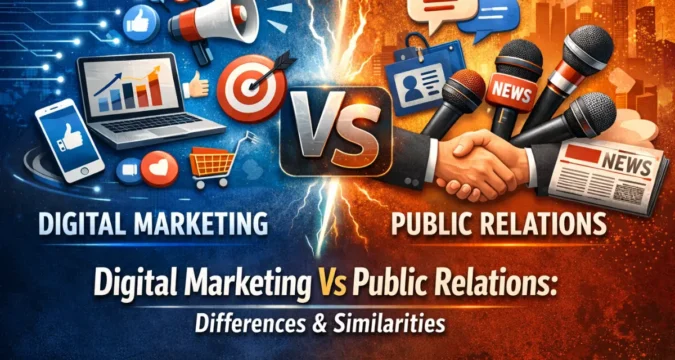
Digital marketing and public relations are two of the different strategies businesses rely on to build visibility, attract customers, and maintain a positive brand image. While both aim to strengthen a brand’s presence and communication with its audience, they operate in different ways and serve distinct purposes.
While digital marketing focuses on driving immediate sales, leads, and conversions through paid and owned channels like SEO and social media ads, public relations builds long-term brand credibility, reputation, and awareness. Businesses execute PR strategies through earned media, such as press coverage and partnerships.
While marketing acts at the bottom of the funnel, PR operates at the top to foster trust. This blog compares digital marketing Vs public relations on different parameters, enabling you to decide which one is right for your business. Explore more!
What Is Digital Marketing?
Digital marketing is usually considered to be “the activity, set of activities, and practices of promoting brands, products, or services using the internet and/or online platforms with the intention to attract, engage, and maintain a desired audience.” Digital marketing is interactive, data-driven, and highly measurable in comparison to conventional marketing.
Key Objectives of Digital Marketing
The key objectives of digital marketing involve increasing website traffic, promoting products and services, targeting specific audiences, and generating leads & sales.
- Increase Website Traffic: Digital marketing aims to drive more visitors to your website by optimizing content for search engines, running ads, or promoting on social media.
- Promote Products or Services: Through digital marketing, businesses can showcase their offerings directly to interested audiences using online channels to increase awareness and encourage purchases.
- Generate Leads and Sales: Digital marketing helps businesses attract potential customers and convert them into paying clients. It does so through campaigns like ads, email marketing, and landing pages.
- Target Specific Audiences: Digital marketing allows precise targeting based on demographics, interests, location, or behavior, which ensures campaigns reach the right people.
Major Channels Used in Digital Marketing
Major channels for digital marketing are SEO, PPC, social media marketing, email marketing, and so on. Here’s how they help in digital marketing:
- Search Engine Optimization (SEO): Optimizes your website and content to rank higher on search engines. It drives organic traffic from people actively searching for your products or services.
- Pay-Per-Click Advertising (PPC): It is about running paid ads on platforms like Google Ads or social media, where you pay only when someone clicks your ad. It helps you generate quick leads and conversions.
- Social Media Marketing: Promotes your brand and engages with audiences on social media platforms like Instagram, Facebook, LinkedIn, or Twitter, thereby increasing visibility and loyalty.
- Email Marketing: Email marketing helps you send personalized messages, offers, or newsletters to subscribers to nurture leads and retain existing customers.
- Content Marketing: It is about creating valuable blog posts, videos, infographics, or guides to educate your audience, build trust, and attract potential customers.
Benefits of Digital Marketing
When it comes to the benefits of digital marketing, they may involve measurable outcomes, precise audience targeting, accelerated campaign adjustment, and more. Here are all the benefits of digital marketing you should know:
- Measurable Results: Digital marketing provides analytics and metrics to track campaign performance, so you know exactly what’s working and what’s not.
- Precise Audience Targeting: You can target audiences based on demographics, interests, behavior, or location, ensuring your marketing reaches the right people.
- Faster Campaign Adjustments: Online campaigns can be quickly tweaked or optimized in real time based on performance data, saving time and budget.
- Scalable Strategies: Digital marketing can be easily scaled up or down to reach larger audiences or focus on specific market segments without major changes.
What Is Public Relations?
To put it in a nutshell, public relations is the strategic communication process of managing an organization’s or an individual’s reputation, building trust, and fostering positive relationships with the public. The process to PR involves planned efforts, like media relations, crisis management, and events, with an intent to shape public perception and influence opinions using ethical, non-paid methods.
Key Objectives of Public Relations
Key objectives of PR, in general, are building brand credibility, managing reputation, earning media coverage, and many more. Here’s how:
- Build Brand Credibility: PR aims to help position your brand as trustworthy and professional in the eyes of customers, media, and stakeholders.
- Manage Reputation: It focuses on maintaining a positive public image and handling any negative perceptions effectively.
- Earn Media Coverage: Public relations initiatives secure mentions in newspapers, online publications, and broadcasts to increase visibility and awareness.
- Strengthen Public Trust: By consistently communicating authentically, the objective of PR is to foster long-term confidence and loyalty among your audience.
Major Channels Used in Public Relations
There are many; however, press releases, media interviews, news coverage, and event management are a few of the major channels preferred for PR. Find out how these channels work in the pointers below:
- Press Releases: These are the official statements distributed to media outlets to announce news, events, or product launches.
- Media Interviews: Engaging with journalists and reporters to share your brand story or expertise.
- News Coverage: Gaining exposure through articles, TV segments, or online media to reach a wider audience.
- Event Management: Hosting or participating in events, conferences, or webinars to connect with your audience directly.
- Crisis Communication: Managing communication during negative situations to protect and restore the brand’s reputation.
Benefits of Public Relations
Similar to digital marketing, PR also has benefits, including building credibility & authority, enhancing brand image, long-term trust building, and more. Here’s how:
- Builds Credibility and Authority: Positive media coverage and expert positioning establish your brand as an authority in your industry.
- Enhances Brand Image: Strategic PR campaigns shape public perception and strengthen your brand identity.
- Creates Long-Term Trust: Consistent and transparent communication helps cultivate lasting relationships with customers and stakeholders.
- Provides Earned Media Exposure: PR generates publicity without direct advertising costs, giving your brand organic visibility.
Key Difference Between Digital Marketing and Public Relations
Both digital marketing and public relations help businesses optimize visibility and build a brand. However, they differ in their goals, communication style, and methods. Look at the table below that highlights the main differences between the two, and the detailed paragraphs to know these differences in detail.
| Parameter | Digital Marketing | Public Relations |
| Primary Goal | Generate leads, sales, and website traffic | Build brand reputation and public trust |
| Communication Style | Direct communication with target customers | Communication through media and public platforms |
| Control Over Message | High control over campaigns and messaging | Limited control once the media publishes the story |
| Medium & Channels Used | SEO, PPC ads, social media, email marketing, and content marketing | Press releases, media coverage, interviews, events |
| Measurement | Easily measurable through analytics and performance metrics | Measured through media coverage, brand mentions, and sentiment |
| Cost Structure | Often requires advertising budgets and marketing tools | Focuses more on relationships with the media and publicity |
| Time Frame | Usually delivers faster and more measurable results | Focuses on long-term brand reputation |
Goal and Purpose
When it comes to digital marketing, it mainly focuses on driving measurable business outcomes such as website traffic, leads, and sales. Public relations, on the other hand, focuses on building a positive brand image and credibility among the public and media.
Communication Approach
Digital marketing and PR are also different in the way they communicate. Digital marketing communicates directly with the target audience through online platforms like search engines, social media, and email. Unlike digital marketing, public relations communicates indirectly, often through journalists, media outlets, and public events.
Control Over Messaging
In digital marketing, companies usually have full control over their campaigns, including content, targeting, and timing. In contrast to digital marketing, in public relations, once information is shared with the media, organizations have less control over how the message is presented.
Channels and Tools
Digital marketing relies on tools, for example, search engine optimization, paid advertisements, social media campaigns, and email marketing. Public relations make use of strategies, like press releases, media interviews, press conferences, and public events to reach audiences.
Measurement and Analytics
Measurement and analysis also differentiate digital marketing and PR. Businesses measure digital marketing performance through metrics like clicks, conversions, website traffic, and return on investment (ROI). Public relations success, however, is usually evaluated through media coverage, audience sentiment, and brand mentions.
Time Frame of Results
Digital marketing campaigns often produce faster results, especially with paid advertising. Public relations, on the other hand, typically focuses on long-term brand reputation and credibility, which may take more time to develop.
Real-World Examples of Digital Marketing and PR
Mentioned below are two of the well-known real-world examples of successful digital marketing and PR initiatives you should know for a clear understanding:
- Digital Marketing Case Study: Dove: Real Beauty Sketches
Brand: Dove
Campaign: Real Beauty Sketches
Objective: To challenge traditional beauty standards and connect emotionally with audiences.
What Happened: Dove created a video experiment where women described themselves to a forensic sketch artist, then strangers described the same women, revealing how harsh self‑perceptions can be. The video was shared across YouTube and social media.
Result: It went viral with millions of global views and significantly boosted engagement and brand affinity that helped Dove strengthen its emotional connection with consumers.
- Public Relations Case Study: Pepsi Refresh Project
Brand: PepsiCo
Campaign: Pepsi Refresh Project (PRP)
Objective: To generate positive public perception and media buzz by funding community projects.
What Happened: Pepsi allocated $20 million to award grants to individuals, nonprofits, and businesses with ideas that improve their community. People voted online for projects, generating huge engagement and public interest.
Result: Over 80 million votes were registered, and at peak, 37% of Americans were aware of the project, generating significant media and public attention.
Digital Marketing Vs. Public Relations: Which Is Better for Businesses?
When it comes to comparing digital marketing vs public relations, neither strategy is inherently better. While digital marketing is ideal for generating leads, website traffic, and measurable sales, public relations is better for building trust, credibility, and long-term brand reputation. Here’s how you can decide when to choose digital marketing and when to choose public relations:
When to Use Digital Marketing
Choose digital marketing when:
- Launching Products or Services: Promote new offerings directly to your target audience and generate immediate interest or sales.
- Driving Online Sales: Use ads, email campaigns, and social media to convert potential customers into buyers.
- Lead Generation Campaigns: Capture leads through landing pages, forms, or newsletters to build your sales pipeline.
- Promoting Time-Sensitive Offers: Quickly spread awareness of discounts, flash sales, or seasonal promotions to boost engagement.
When to Use Public Relations
Opt for a public relations initiative when:
- Building Brand Reputation: Strengthen credibility and public perception through media coverage and positive storytelling.
- Crisis Management: Address negative situations, rumors, or controversies to protect your brand image.
- Major Company Announcements: Communicate significant updates such as mergers, expansions, or awards to a broad audience.
- Establishing Media Relationships: Engage with journalists, influencers, and thought leaders to create long-term visibility and trust.
How Digital Marketing and PR Work Together
Despite the differences between digital marketing and public relations, most successful businesses combine both strategies. It, at times, brings massive success to the businesses. Take a sneak peek at the sections below to know how amalgamating these two strategies brings success:
PR Builds Trust, Marketing Drives Conversions
If you use PR and digital marketing together, Public relations establishes credibility and authority, and makes your digital marketing campaigns more effective.
Media Coverage Boosts Online Campaigns
Press mentions and news coverage through PR are likely to increase website traffic, social engagement, and ad performance, boosting your digital marketing.
Amplifying Brand Messages
PR stories can be shared through social media, email newsletters, and blogs to maximize reach, backing digital marketing efforts and outcomes.
Crisis Management Support
Coordinated PR and digital marketing can quickly communicate accurate information during a crisis to maintain trust.
Integrated Campaigns Increase ROI
Combining PR’s credibility with digital marketing’s targeting and analytics creates stronger, measurable results.
Challenges of Digital Marketing and PR
Apart from the benefits and others, PR and digital marketing both come with many challenges, setting them apart from each other. Here’s how they’re different:
Challenges of Digital Marketing
- Increasing competition in online advertising
- Rising cost of paid ads
- Constant algorithm changes on search engines and social media
Challenges of Public Relations
- Limited control over media coverage
- Difficult to measure direct ROI
- Requires strong relationships with journalists and media outlets
Conclusion
Digital marketing and public relations play important roles in shaping a brand’s visibility, credibility, and overall success. While digital marketing aims to drive measurable outcomes such as website traffic, leads, and conversions through online channels, public relations concentrates on building trust, managing reputation, and maintaining positive relationships with the public and media.
Rather than viewing them as competing strategies, you can integrate both approaches for business benefits. Public relations helps establish credibility and strengthen brand perception, while digital marketing amplifies that message and delivers targeted engagement with the audience.
Now that you’ve been through the comparison of digital marketing vs public relations, choose PR or digital marketing for the healthcare industry, or whatever industry you deal in, to make the most out of your business initiatives.
FAQs
What is the main difference between digital marketing and public relations?
While digital marketing focuses on promoting products or services through online channels to generate leads and sales, public relations aims to build a positive brand image and maintain relationships with the media and the public.
Is digital marketing part of public relations?
No, digital marketing and public relations are separate fields, but they often work together. Digital marketing drives online visibility and conversions, while PR builds credibility and trust through media and public engagement.
Which is better for a business: digital marketing or public relations?
Both are important. Digital marketing helps generate traffic and sales, while public relations strengthens brand reputation and credibility. Businesses usually benefit from using both strategies together.
Can public relations improve digital marketing results?
Yes. Positive media coverage and strong brand reputation from PR can increase trust, which often improves the effectiveness of digital marketing campaigns.
What are examples of public relations activities?
Examples of public relations activities include press releases, media interviews, crisis communication, event management, and maintaining relationships with journalists and media outlets.
How do companies measure digital marketing success?
Digital marketing success is measured through metrics such as website traffic, click-through rates, conversions, return on investment (ROI), and engagement rates.
How do companies measure public relations success?
PR success is often measured by media coverage, brand mentions, audience sentiment, share of voice, and the overall impact on brand reputation.
Do small businesses need public relations?
Yes. Even small businesses benefit from PR by gaining local media coverage, building credibility, and strengthening trust with their target audience.