
Table of Contents
Students no longer find colleges through billboard advertisements. Parents do not trust newspaper advertisements without questioning their validity. Admissions teams must stop using seasonal campaigns and hope-based outreach as their only solutions.
The online search process today starts every admission journey. Students begin their search with Google searches, YouTube walkthroughs, Instagram reels, online reviews, and comparison websites. After that, they complete the inquiry form process.
Digital Marketing for educational institutions has become essential for survival, as no institution can function without it.
Recent global education marketing studies show that more than 85% of students research institutions online before making an inquiry, and over 70% of parents compare at least three institutions digitally before shortlisting. Institutions’ academic performance will not attract students unless they establish an online presence and build trust and authority.
Educational institutions now use digital marketing to show their academic programs. The process directly affects five areas: visibility and credibility, lead quality, enrollment planning, and institutional growth over the coming years. This guide explains exactly how.
Popularity of Digital Marketing For Educational Institutions
Digital marketing has become a standard tool for educational institutions to attract students worldwide. Educational institutions across India and the world are now investing in digital marketing to expand their educational programs.
The data shows that Digital Marketing has become more popular among educational institutions because of the following:
- Over 90% of students use Google search as the first step in their admission journey.
- YouTube is the second most influential platform for education research after search engines.
- Digital advertising campaigns deliver lower lead-acquisition costs than print and outdoor advertising.
- Active remarketing efforts help institutions achieve 35% higher rates of student enrollment conversion.
- Mobile devices currently account for more than 70% of all traffic related to college admissions.
- Educational institutions that publish regular educational materials achieve higher levels of brand recognition and trust from audiences.
The evidence shows that your institution loses potential inquiries due to a lack of an online presence.
Importance of Investing in Digital Marketing for Educational Institutions
Educational institutions that invest smartly in digital marketing not only create leads but also establish permanent admission pathways through their operations. They build lasting brand credibility, leading to consistent student enrollment throughout the academic year.
Educational institutions must invest in digital marketing because it is essential to their operations.
Admissions Depend on Online Visibility
Students who visit your institution will not consider it a viable option because they cannot find it on Google, YouTube, or social media.
Educational institutions’ digital marketing efforts create online platforms that demonstrate their presence when students make enrollment decisions.
- Admission-related search terms are primarily used in course searches.
- Students show higher trust levels towards schools that maintain better Google search rankings.
- The combination of paid advertising and organic search results increases visibility, leading to more potential customer inquiries.
- The visible presence of information establishes immediate authority for parents and students.
The admissions process begins with the institution’s first visible presence.
Students and Parents Research Before They Inquire
Admission decisions today use three methods: research findings, comparative studies, and building trust.
Students and parents research all available information about their inquiry before completing an inquiry form, including website content, course details, faculty information, student reviews and testimonials, placement information, and campus life content.
The education sector uses digital marketing to support research-based decision-making.
- Websites function as online guides that provide counseling services to users.
- Videos demonstrate answers to questions while they create a reassuring atmosphere.
- The selection process depends on the impact of reviews.
Consistent Lead Generation Across the Academic Year
The admissions season is the primary operational period for traditional marketing. Digital marketing operates year-round.
Educational institutions need to implement digital marketing solutions that establish permanent channels for student inquiries.
- The SEO system generates daily inbound inquiries for the organization.
- The organization can increase its advertising reach through paid campaigns, enabling rapid expansion.
- Abandoned students express interest through retargeting efforts, which bring them back to the organization.
Better Lead Quality Compared to Traditional Marketing
Not every lead is valuable. Offline marketing often generates random inquiries with low intent.
Digital marketing enables automated audience targeting by delivering ads to users who actively search for educational programs and institutional information.
Educational digital marketing services deliver high-quality lead generation through their websites, targeting specific educational institutions.
- High-intent keyword targeting
- Course-specific landing pages
- Behavior-based retargeting
- Qualification through smart inquiry forms and automation
Cost Efficiency and Measurable ROI
Digital marketing relies on established methods because its activities deliver measurable results. Digital marketing activities permit complete tracking of their results.
Digital marketing is the primary approach for educational institutions because it delivers better results than traditional offline channels.
- Clear cost per lead visibility
- Real-time budget optimization
- Channel-wise ROI clarity
- Faster marketing decisions based on real data
Stronger Institutional Brand and Credibility
Brand trust plays a major role in admissions. Students will avoid an institution with strong academic programs if its online presence is weak or inactive.
Educational institutions establish credibility through digital marketing, which relies on ongoing communication and authority-building.
- Thought leadership content improves trust
- Faculty and campus storytelling builds connection
- Student success stories increase confidence
- Reviews and testimonials build proof
Faster Decision-Making Through Automated Nurturing
Students typically need several weeks or several months to make their admissions decision. They require follow-ups, reminders, reassurance, and guidance. Digital marketing automation streamlines this process.
10 Digital Marketing Strategies To Boost Sales and Leads for Educational Institutions
Institutions need to implement structured systems because random advertising and social media use do not lead to successful admissions growth.
A strong system attracts the right students who trust the educational process and acquire knowledge that leads to their enrollment.
The complete growth engine for educational institutions operates through Digital Marketing services.
Educational institutions that seek consistent, reliable student enrollment should use these most effective digital marketing strategies.
- Conversion-Optimized Landing Pages for Admissions
Your landing page serves as a decision-making tool rather than a brochure.
Educational institutions that direct paid traffic to normal website pages lose potential customers because their links lead to pages that do not assist students in their search process.
A conversion-optimized landing page focuses on one goal: converting student interest into inquiry.
The essential components that enable educational institutions to create effective landing pages for digital marketing success include:
- Educational institutions need to establish clear course descriptions that explain their offerings and advantages to students.
- Educational institutions need to develop programs that deliver positive results through employment opportunities, professional development, and academic achievements.
- Trust signals such as approvals, rankings, certifications, awards, and affiliations
- Simple inquiry forms with minimal fields
- Strong CTA buttons like “Apply Now,” “Book a Counseling Call,” or “Download Prospectus.”
- AI SEO to Rank Courses on High-Intent Keywords
Traditional SEO focuses mainly on traffic. Smart institutions focus on intent.
AI SEO is designed around how students actually search online. It helps institutions rank for keywords that indicate strong interest in admissions.
This is where digital marketing strategies for educational institutions create long-term advantage.
AI SEO helps by:
- Finding admission-ready keywords that students are actively searching for
- Understanding the search intent behind course-related queries
- Creating content clusters around degrees, career paths, and admissions
- The process involves ongoing content enhancements driven by monitoring both ranking metrics and actual performance metrics.
- Website SEO to Achieve First-Page Rankings
Your business’s strongest asset is your website, which needs to achieve high search engine rankings. The SEO practices of your website enable students to find your institution when they search for academic programs and educational institutions. The content extends beyond basic blog articles.
The main subjects of study include the following areas:
- Technical SEO for speed, crawlability, and indexing
- Course page optimization with proper keywords and structure
- Internal linking to improve authority flow
- Structured data for education-related search results
Institutions that appear on the first page of search results successfully attract students without making any efforts to recruit them. The first strength of Digital Marketing for educational institutions through SEO is its ability to attract students without requiring active recruitment.
- Paid Marketing for Quick and Qualified Admission Leads
Achieving faster inquiry growth requires institutions to use paid marketing, which delivers immediate results.
The outcome of a project depends on the chosen approach. Running ads without planning can quickly waste budget.
Professional digital marketing services for the education industry prioritize high-intent targeting over vanity metrics such as views and likes.
The components of successful paid marketing include High-performing paid marketing includes:
- Google Search ads for admission intent keywords
- Geo-targeting based on location and campus reach
- Device-based targeting to focus on mobile traffic
- Proper conversion tracking linked to inquiry forms
- Campaign optimization based on lead quality, not just cost
Paid marketing works best when supported by landing pages, remarketing, and follow-up systems.
- Video Marketing to Showcase Campus, Faculty, and Outcomes
Education requires trust between decision-makers and the choices they make. Video establishes trust more effectively than any other media format. Students and parents want to see real people, real campuses, and real outcomes before they inquire.
Educational institutions use video marketing in their digital marketing because it provides effective results.
- Reduces uncertainty
- Humanizes the institution
- Answers unspoken questions
- Builds emotional connection
Campus tours, faculty introductions, student testimonials, and placement stories consistently improve inquiry quality and conversion rates.
- Retargeting and Marketing Automation for Enrollment Growth
Most students require more than one visit before making their first conversion. Customers leave the website to conduct comparisons before returning to make their decision. Your institution maintains its presence during this decision period through retargeting efforts. The strategy becomes a conversion multiplier when combined with automation.
Key components include:
- Website visitor retargeting
- Form abandonment follow-ups
- Behavior-based ad messaging
- Automated email and WhatsApp sequences
Although Search Engine Optimization is one of the most underutilized digital marketing strategies in the education industry, it recovers a significant number of lost leads.
- Email Marketing for Structured Lead Nurturing
Email marketing remains effective but needs to educate customers instead of sending them spam messages. Educational institutions use email as their primary digital marketing tool to reach students who have not yet chosen their academic path.
Effective email nurturing requires three main components which need to be established.
- The program requires students to understand the academic requirements which lead them to successful program completion.
- Students need to understand all admission-related information which includes admission dates and all required admission steps.
- The program needs to address all student inquiries, present a proven track record, and establish trustworthiness.
The dedicated email sequence system enables students to make decisions faster, while digital marketing teams achieve higher enrollment rates without additional ad spend.
- WhatsApp Marketing for Real-Time Counseling and Follow-Ups
Students expect quick replies. Delayed communication reduces trust and kills intent.
WhatsApp has become one of the most effective communication tools for educational institutions.
Why WhatsApp works:
- Extremely high open rates
- Real-time engagement
- Seamless counselor handover
- Faster trust-building
Institutions using WhatsApp strategically often see faster decision-making and higher enrollment closure rates.
- Social Media Marketing to Build Trust and Student Engagement
Social media platforms do not function as direct admission sales channels. The platform establishes credibility through its operational functions. Students and parents use social media to assess the credibility of educational institutions before making inquiries.
The education sector uses social media platforms to build trust in its digital marketing efforts.
The following elements are key to successful social media outreach.
- Student life and campus culture posts
- Faculty expertise videos and educational tips
- Placement achievements and success stories
- Event highlights and workshops
- Admission updates and scholarship announcements
- Student engagement activities
A strong social media presence supports every other marketing channel.
- Online Reputation Management to Influence Admission Decisions
Online reviews influence admissions more than brochures ever did. Parents trust peer experiences. Students trust real feedback from current and past students.
Online reputation management ensures your institution’s strengths are clearly visible online.
This includes:
- Google review optimization
- Collecting testimonials from students and parents
- Responding to negative reviews professionally
- Building trust assets like review screenshots and video testimonials
A strong online reputation improves inquiry-to-enrollment conversion rates and increases long-term credibility.
Tools to Track Digital Marketing Success for Educational Institutions
The tools enable educational institutions to measure their digital marketing performance. The universities conduct their digital marketing activities without measurement systems, making their operations akin to running admissions processes without vision.
Educational institutions need these tools because they are essential to their digital marketing efforts.
- Google Analytics

The Google Analytics tool enables educational institutions to track student website activity until they submit their inquiries.
- Track traffic sources like search, ads, social, referrals
- Identify high-performing course pages
- Measure inquiry form conversions
- Understand drop-off points in admission journeys
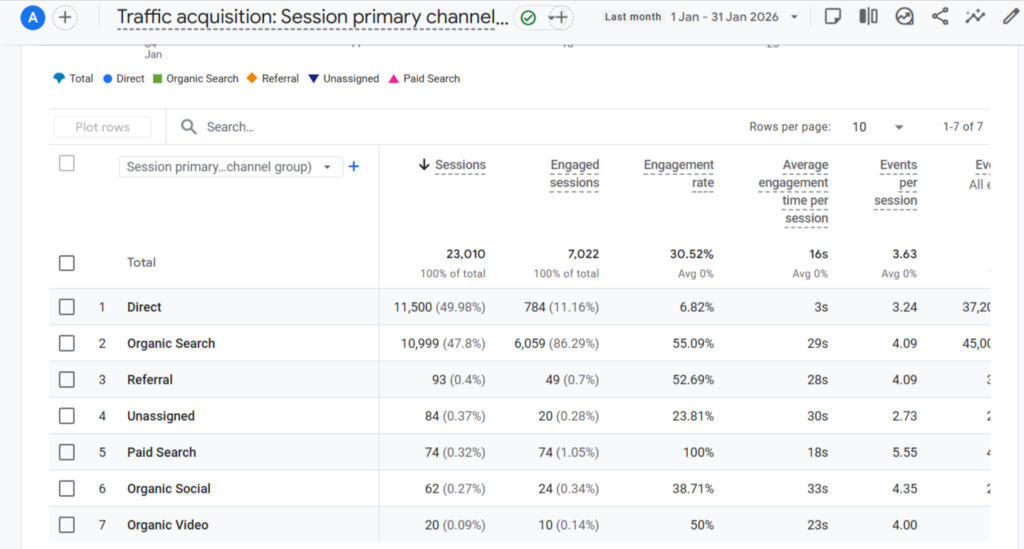
Digital marketing for educational institutions requires analytics to identify which marketing platforms drive actual student enrollments rather than just website visits.
- Google Search Console
Search Console is an essential tool that supports both organic growth efforts and SEO-based admissions processes.
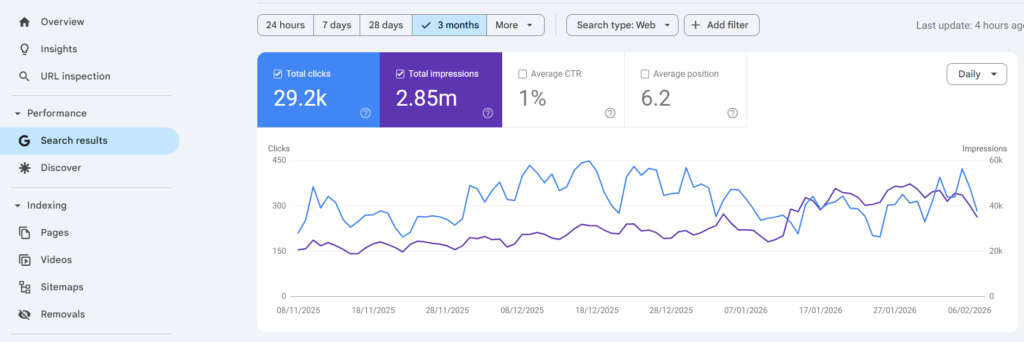
- Monitor keyword rankings for courses
- Identify pages getting impressions but low clicks
- Fix indexing and technical SEO issues
- Improve CTR for admission-related searches
Every serious digital marketing strategy for educational institutions relies on Search Console insights to sustainably grow visibility.
- Microsoft Clarity
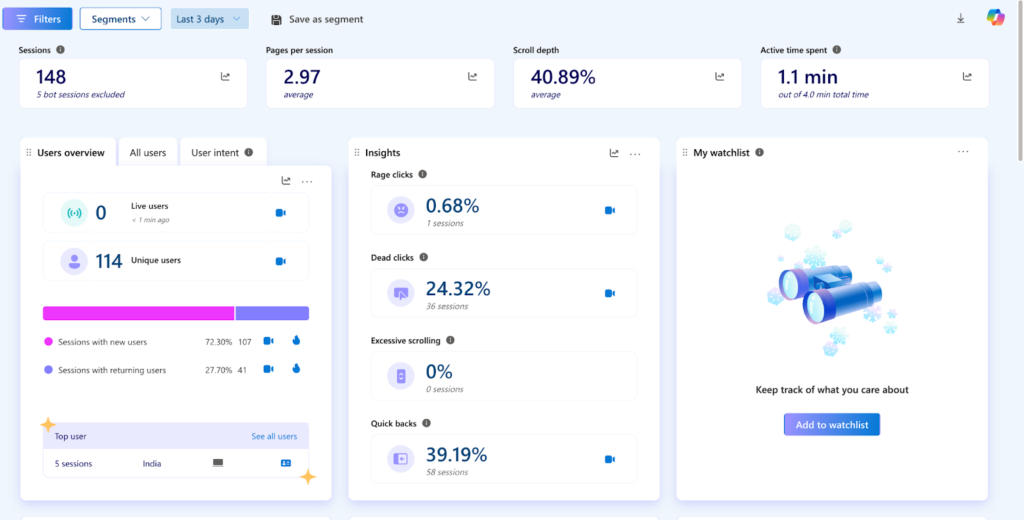
Microsoft Clarity provides a clear view of how students engage with your website. Not just the click but how explore between each website page. These insights are crucial for educational institutions to improve admission pages and forms.
For Digital Marketing for educational institutions, Clarity helps educational institutions address gaps and set the stage for better conversion.
- Session recordings reveal real user behavior
- Heatmaps show where attention drops
- Identify form friction and confusion points
- Spot mobile usability problems instantly
When combined with Analytics, Clarity allows you to turn assumptions into clear, actionable fixes that directly improve lead conversions.
- SEMrush
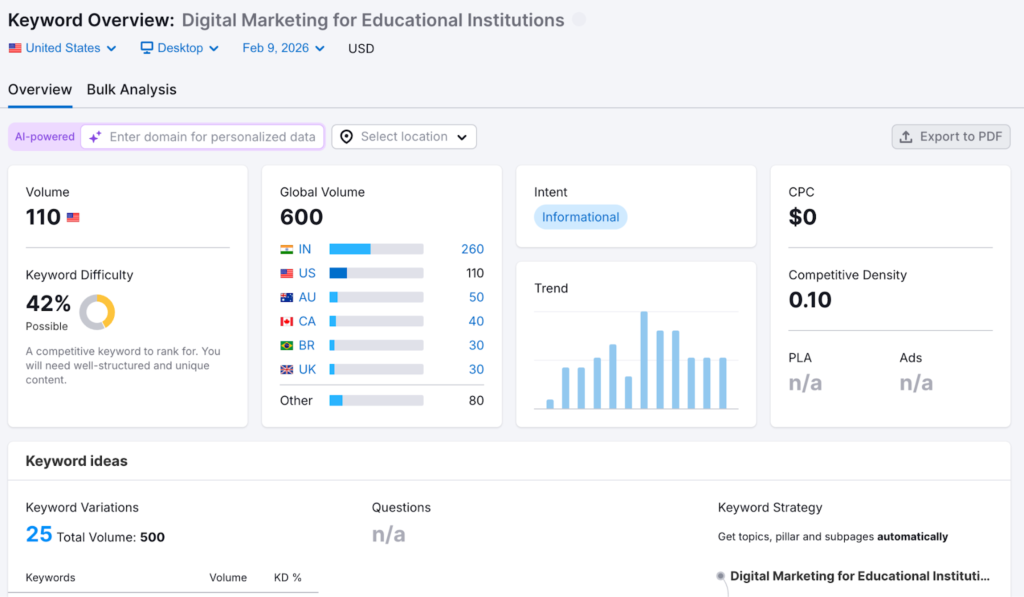
SEMrush provides educational institutions with tools to monitor their rivals and conduct keyword research.
- Discover high-intent course keywords
- Analyze competitors’ digital strategies
- Track ranking improvements
- Audit website SEO health
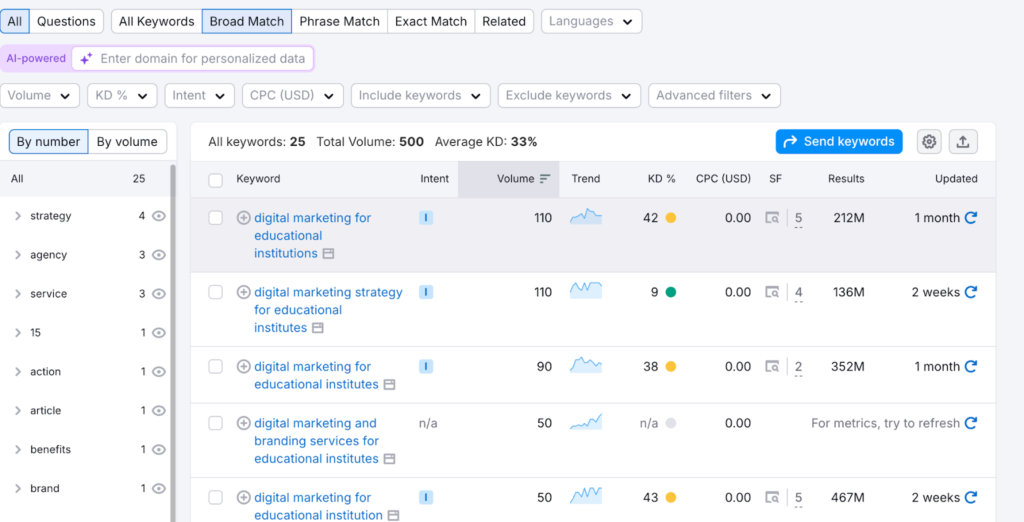
Educational institutions use SEMrush to build their online presence through digital marketing services, enabling them to capture search demand before competitors are aware of it.
- Google Ads
Google Ads provides full control over paid admission lead generation.
- Track cost per inquiry
- Optimize campaigns by intent keywords
- Measure conversion quality
- Control seasonal admission budgets
For educational institutions, Google Ads is one of the fastest and most scalable channels in digital marketing.
- Meta Ads Manager

Meta Ads Manager supports marketing across Facebook and Instagram.
- Track engagement-driven inquiries
- Optimize creatives for trust-building
- Retarget website visitors
- Analyze demographic response
- HubSpot
HubSpot connects marketing and admissions into a single, comprehensive system.
- Track leads from inquiry to enrollment
- Automate email and WhatsApp nurturing
- Score leads by intent
- Improve counselor productivity
The joint work of the marketing and admissions teams, leveraging shared lead information, will improve the digital marketing strategy used by educational institutions to attract students.
Common Mistakes To Avoid in Digital Marketing for the Educational Industry
In the education sector, many colleges/universities lose enrollment due to issues they could have prevented. Knowing what not to do is just as important as executing your strategies.
Treating Digital Marketing as Seasonal
Campaigns begin before clients contact them. People start learning about the product at least two months before its official launch. The suspension of off-season digital marketing work is causing permanent damage to our active client acquisition system.
Sending Traffic to Generic Website Pages
Homepage traffic reduces conversion rates. The admissions conversion process requires that landing pages be established specifically for each inquiry with an intended goal, or target for the inquiry.
Ignoring Mobile Optimization
Most prospective students will access information on your website via their mobile devices. Websites that load slowly or have excessive page clutter will negatively affect conversion rates.
Running Ads Without Tracking
Institutions that run paid advertising campaigns without tracking conversion rates are wasting their advertising budgets and making poor decisions.
Not Aligning Marketing With Counseling Teams
If an institution’s counseling staff is not aligned with its digital marketing campaigns, leads will quickly become stale, and any trust built between the lead and the institution will begin to erode.
By avoiding these mistakes, institutions will improve execution across all levels of digital marketing.
Future Trends in Digital Marketing for Educational Institutions
Education marketing experiences rapid development. The institutions that adopt changes before their competitors will achieve superior enrollment results during the next ten years.
AI-Driven Personalization
AI technology will create customized content and emails, along with personalized counseling paths, based on students’ actions, educational needs, and personal preferences.
Voice and Conversational Search
Students increasingly use voice assistants to search for courses. SEO strategies will adapt to conversational intent.
Short-Form Video Dominance
Reels and Shorts, along with snackable videos, will serve as the primary trust-building resources institutions use to establish credibility with their audiences.
Predictive Admission Analytics
Data will be used to forecast enrollment probability, drop-offs, and counselor performance.
First-Party Data Focus
With privacy changes, institutions will rely more on owned data to drive digital marketing strategies and support growth in the education sector.
Institutions that adopt these trends will achieve better results than those that maintain their legacy systems.
Conclusion
Here’s the reality.
The entire admissions process now operates through online platforms. People focus on digital content. Digital methods serve as the foundation for establishing trust. Digital platforms are how organizations make decisions. Institutions that still rely on traditional marketing methods, along with their unpredictable marketing efforts, are experiencing a gradual decline in their industry presence.
Educational institutions now need digital marketing because they must control their admission process while enhancing lead quality, establishing their institutional reputation and achieving predictable annual growth.
When educational institutions execute digital marketing strategies successfully, those strategies become the most powerful growth tool for every institution, regardless of size, location, or classification.
FAQs
Why is digital marketing important for educational institutions today?
The admission process requires digital marketing because students and parents use online platforms to research and compare their options. The admission process requires digital marketing to help schools build trust with prospective students and sustain consistent admissions inquiries year-round.
Which digital marketing strategy works best for educational institutions?
The combination of SEO, paid search, landing pages, and retargeting plus nurturing leads to optimal results. The results require multiple channels to work together; no single channel can deliver results on its own.
How long does digital marketing take to show admission results?
Paid advertising campaigns generate leads for immediate results. The combination of SEO and content marketing delivers strong results over 3 to 6 months when executed consistently.
Is digital marketing cost-effective for schools and colleges?
Yes. The digital marketing system delivers improved lead generation at a lower cost per lead than traditional media, while enabling schools to track their return on investment.
Can small educational institutions benefit from digital marketing?
Absolutely. Digital marketing enables all educational institutions to compete in the market by adapting to their budget constraints and operational needs.