
Table of Contents
Most people no longer walk past restaurants. They encounter them when they scroll through videos, read posts by creators, or watch food clips that leave them immediately hungry. According to Cropink reports, it has been found that more than 70% of the clients learn about new restaurants via social media.
According to the African Journal of Biomedical Research, more than 85% of people prefer to eat meals outside their diet due to influencer marketing.
That is why many restaurants today consider influencer collaborations a primary growth strategy. They combine these partnerships with online marketing and good search rankings to turn online views into real customers who come back often.
Popular Statistics of Influencer Marketing for Restaurants
Social media has revolutionized how individuals find and choose restaurants. The statistics in the food industry indicate that influencer marketing is no longer a mere psychological gimmick. It is now influencing a huge portion of customer decisions, brand recognition, and increased foot traffic.
These key figures show why influencer marketing is so significant for restaurants in 2026.
- According to IDS Next, 60% of the customers report finding new restaurants via social media. Apps like Instagram and TikTok have become the new way people share recommendations.
- Nearly half of the diners rely on influencer recommendations to identify new restaurants. Creators really guide where people go.
- The engagement and foot traffic at the restaurant that collaborates with influencers increases significantly. The outcomes manifest in real life and online.
- The majority of restaurant owners report much higher engagement after starting to use influencer marketing. Many places in the industry now use it.
Types of Influencers Restaurants Should Work With
Not every influencer fits every restaurant. Picking someone just because they have a lot of followers often wastes money.
1. Local Micro-Influencers (Min. 5K–50K Followers)
These are usually the best choice for restaurants.
Why they work well:
- Very active local followers
- High trust from their audience
- Lower cost to work with
- They bring people from the nearby area
Local micro-influencers often get more real visits than big-name influencers.
2. Food-Focused Creators
These creators talk mostly about food and already tell people where to eat.
Benefits:
- Their followers look for food ideas
- They have strong trust in food topics
- They tell good stories about taste and the experience
3. Lifestyle Influencers with Local Authority
They show more than food. They show a lifestyle.
This works great for:
- Cafes
- Upscale restaurants
- Unique concept spots
- Date-night places
They transform your restaurant into an experience and not a meal.
4. Community Creators and City Explorers
These creators look for hidden or new spots in cities.
They are perfect for:
- New restaurant openings
- Building more local awareness
- Bringing in people who want to try something new
Besides Influencer marketing, turning to full-scale digital marketing for a restaurant can boost sales by 2-3x.
How Influencer Marketing Attracts Customers
Individuals do not just choose a restaurant randomly. They get inspired first. They view a beautiful dish, a good place, or an experience that fits their mood. At that point, influencer marketing begins to take effect, even before one considers making a reservation.
Here is how it turns attention into actual customers.
1. Creates Discovery in the Natural Browsing Journey
Individuals spend hours daily scrolling through social media. The influencer posts present your restaurant to them in a natural way, without appearing like an advertisement.
- People see your restaurant while looking at lifestyle content
- It feels real, not forced
- Strong visuals make the place look inviting right away
Normal online ads cannot create that first, natural moment either.
2. Builds Trust Before the First Visit
People trust other people more than they trust brands. Once the individual they are following has a real experience to share, they are not that bothered about going to a new place.
- Honest reactions replace sales talk
- Followers see what the place is really like
- A familiar creator recommending you lowers doubt
Trust turns interest into action.
3. Makes Food Decisions Visual and Immediate
Eating out is about senses. Influencer content shows food, presentation, and atmosphere in a way that feels real.
- Clear photos of dishes create instant hunger
- Videos show texture, how it’s made, and portion size
- Atmosphere shots help people picture themselves there
These quick feelings lead to last-minute visits.
4. Drives Search Behavior That Leads to Conversion
After seeing influencer content, people search your restaurant name, check reviews, and look for directions. Good search rankings catch that interest.
- Influencer posts increase searches for your name
- People check the details before coming
- Strong online setup turns interest into visits
Influencers start the interest. Search helps finish it.
5. Encourages Social Validation and Group Decisions
Most people decide where to eat together with friends or family. Influencer content gives them something to talk about.
- Friends share videos when choosing a place
- Influencer picks become part of the conversation
- Group agreement makes decisions faster
This spreads the reach beyond the original post.
6. Generates Continuous Word-of-Mouth Momentum
A single post by the influencer can prompt customers to post their photos and videos. This sustains the attention.
- Guests copy the style they saw
- Posts from real visitors add trust
- The buzz continues long after the first post
This ongoing conversation delivers influencer marketing results that last longer than those from regular ads.
On top of this, SEO for restaurants is a great way to drive ranking on search pages and attract high-intent customers.
How Influencer Marketing Fits Into the Restaurant Marketing Funnel
Some restaurant owners think influencer marketing only helps people notice you. That view misses a lot.
When done right, it supports every step of customer acquisition.
Awareness Stage
Creators, show your restaurant to new people.
Consideration Stage
Viewers save posts, read reviews, and search your name. Search rankings help here.
Decision Stage
They check your Google profile, menu, or location after seeing the content multiple times.
Action Stage
They walk in because the place already feels familiar.
This is the reason the influencer work should be interrelated with online marketing, local search, review management, and follow-up advertising.
How to Build a Winning Influencer Marketing Strategy for Restaurants
Random partnerships create confusion. A clear plan brings repeat customers.
Step 1: Define the Real Objective
Decide what you want before you contact influencers:
- More customers on slow days?
- Awareness for a new location?
- Promotion of a signature dish?
- Higher-end image?
- More local discovery?
Clear goals guide the whole plan.
Step 2: Choose Influencers Based on Audience Geography
If the followers cannot come to your restaurant, the partnership fails.
Focus on:
- Creators within 5 to 10 km
- Followers mostly in your city
- Content that already features local businesses
Local fit matters most.
Step 3: Design Experiences, Not Promotions
Do not just ask them to film. Create moments people want to share.
Examples:
- Chef’s table preview
- Build-your-own dish activity
- Limited tasting event
- Kitchen tour
- New season launch night
Special experiences give better content.
Step 4: Encourage Storytelling Over Scripts
Forced scripts look like ads. People skip them.
Let creators:
- Use their own words
- Share real reactions
- Show the real place
- Capture natural moments
Real storytelling gets more attention.
Step 5: Optimize for Discovery Beyond Social Media
Influencer posts should make people search for you.
When they search your name, your search rankings need to be strong to catch them.
Make sure:
- Google Business profile is up to date
- Menu shows up easily
- Location is optimized
- Reviews are managed well
This turns interest into visits.
Content Formats That Drive the Most Restaurant Traffic in 2026
Not every type of content works the same. These formats attract the most people.
Short-Form Reels Showing the Full Experience
Quick, full walkthroughs turn curiosity into plans to visit.
“What I Ordered” Content
Simple and helpful format that guides decisions.
Hidden Gem Discovery Videos
They create a sense of urgency and make the place feel special.
Behind-the-Kitchen Stories
They build trust and emotional connection.
Value-Based Recommendations
People respond well to content that shows good value.
These formats keep bringing results long after the post goes live.
How to Measure ROI from Influencer Campaigns?
Many people think influencer marketing only builds awareness and cannot be measured. That is true only when there is no plan. When tracked properly, these partnerships can be measured clearly and often give better results than paid ads.
Here is how restaurants can track the return.
1. Track Footfall During Campaign Windows
Compare walk-ins and reservations before, during, and after influencer posts.
- Check busy hours after content goes live
- Compare weekdays to previous weeks
- Look for spikes tied to specific posts
Most influencer visits occur within 48 to 72 hours.
2. Use Unique Offers or Promo Hooks
Give influencers a trackable offer.
- Limited-time dishes
- Discounts for mentioning the post
- Special codes per creator
This helps connect real sales to the partnership.
3. Measure Branded Search Growth
People search your name after seeing the content. Track that increase.
Watch:
- More Google searches for your restaurant
- Map views and direction requests
- Website visits from name searches
A rise shows strong interest.
4. Analyze Engagement That Signals Purchase Intent
Focus on signs that show real plans to visit.
- Saves and shares of food posts
- Comments asking for location, prices, or menu
- Messages asking for more info
These matter more than likes.
5. Monitor Review Volume After Campaigns
Good campaigns bring new customers who leave reviews.
- More Google reviews
- Mentions of the influencer in reviews
- Better ratings from first-time visitors
This helps search rankings long-term.
6. Evaluate Content Value Beyond the Initial Post
You get content you can use again.
- Turn videos into ads
- Use photos on social and website
- Extend reach with follow-up ads
This saves money on future content.
7. Compare Cost Per Customer Against Traditional Advertising
When tracked well, influencer partnerships often cost less per new customer.
Ask:
- How much did the campaign cost?
- How many extra visits came in?
- What was the average spend per visit?
This gives a clear return number.
How to Budget Influencer Marketing the Smart Way?
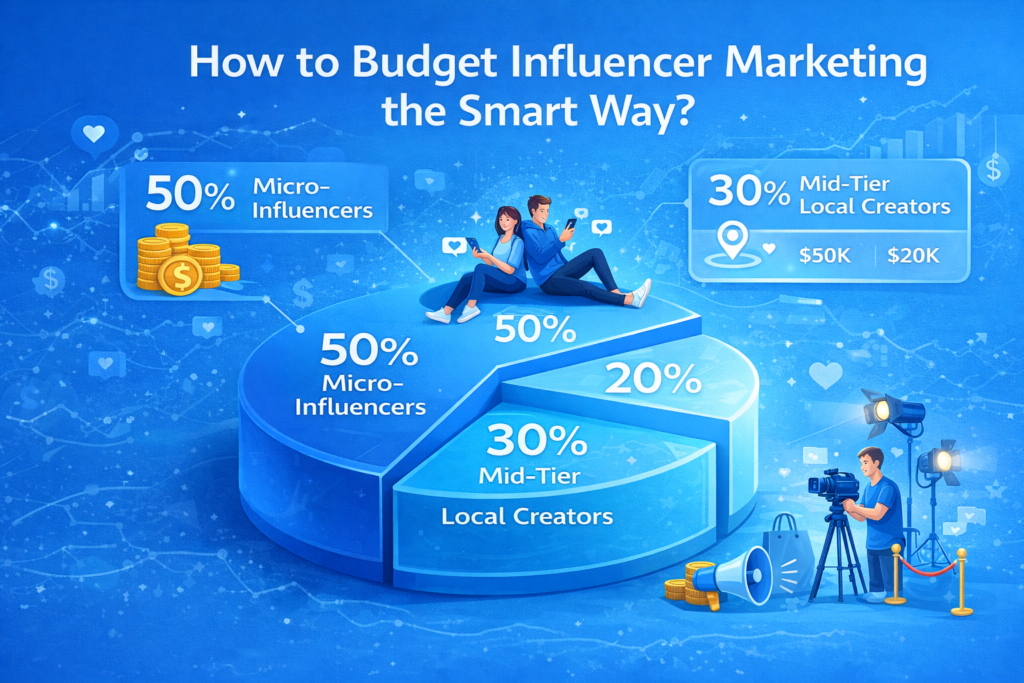
Spending big on famous influencers rarely works well for steady customers. One big post fades fast. Growth comes from regular, local, repeated visibility.
A smart budget split looks like this:
50% Micro-Influencers
Focus on local creators with engaged followers. They bring real visitors, foster honest conversation, and deliver good value for the cost.
30% Mid-Tier Local Creators
These expand reach while staying local. They grow awareness without losing trust.
20% Experiential Campaign Production
Spend on creating shareable moments. Tastings, chef talks, or limited specials make stronger content.
Common Mistakes Restaurants Must Avoid
Many restaurants try influencer marketing once, see no big change, and think it does not work. Usually, the problem is in the planning, not the method. Avoiding these mistakes turns spending into steady new customers.
1. Choosing Influencers Based Only on Follower Count
Big follower numbers far away do not bring local customers.
- Put local fit first
- Check where followers live and how they engage
- Choose creators whose audience can visit
Proximity matters more than size.
2. Treating Influencer Marketing as a One-Time Activity
One partnership builds awareness. Regular ones build memory.
- Plan monthly or quarterly work
- Keep showing up
- Build recognition over time
Consistency turns discovery into regular visits.
3. Over-Controlling the Content
Heavy control makes content feel fake. People skip it.
- Let creators use their own voice
- Focus on the experience
- Trust their style
Real content gets more attention.
4. Ignoring the Post-Discovery Journey
Interest starts with the post, but a weak online presence loses it.
- Keep Google profile current
- Make the menu and location easy to find
- Connect campaigns to the online setup
Discovery needs to lead smoothly to visits.
5. Not Preparing Operations for Increased Demand
Successful campaigns can bring sudden crowds. Poor service ruins the chance.
- Train staff before launch
- Keep popular dishes ready
- Deliver what was shown
Marketing sets expectations. Operations must meet them.
6. Failing to Track Performance
Without tracking, you’re just guessing and cannot improve.
- Watch reservations and walk-ins
- Track search increases and reviews
- See which partnerships bring real visits
How Influencer Marketing Strengthens Long-Term Brand Equity
Beyond quick visits, influencer partnerships also:
- Build a clear brand image
- Create content you can reuse
- Increase online searches
- Generate natural mentions
- Grow trust with new people
Influencer marketing is a smart investment rather than a short-term cost because of this long-term value.
Future Trends Shaping Influencer Marketing for Restaurants in 2026 and Beyond
Hyper-Local Creator Networks
Restaurants will work with groups of nearby creators rather than a single big name.
Search + Social Integration
Social discovery will drive more searches, making strong search rankings even more important.
Creator-Led Menu Launches
Limited-time menu items will be developed in collaboration with influencers.
Data-Driven Influencer Selection
Creators will be selected using tools that rely on real visit potential rather than on the number of followers.
Always-On Collaboration Models
Restaurants are not going to have short-term campaigns; they will maintain on-going partnerships.
How to Start Influencer Marketing for Your Restaurant Today
If you are just starting, keep it simple:
- Find 10 local food creators
- Invite them for a special experience
- Focus on real stories, not hard selling
- Connect to your online marketing goals
- Improve search rankings to catch people looking you up
- Repeat every month with new creators
Regular work builds results.
Conclusion
Individuals first choose to eat on their phones rather than at the table.
That is why influencer marketing is one of the most appropriate means to attract attention, build trust, and attract customers in 2026. It is a blend of discovery, trust, and firsthand experience that cannot be matched by traditional ads.
Coupled with effective online marketing and good search rankings, influencer collaboration generates long-term visibility, returning clients, and brand equity.
Restaurants that employ such a strategy no longer pursue customers. Customers schedule a visit before they arrive.
FAQs
Is influencer marketing suitable for small restaurants?
Yes. Local micro-influencers often give better results than big creators and work well for neighborhood spots.
How often should restaurants run influencer campaigns?
Regular work matters more than big ones. Monthly partnerships keep you in mind.
Can influencer marketing replace traditional advertising?
It works best together with online marketing, not instead of it.
How do we measure success from influencer collaborations?
Track reservations, search increases, social engagement, and repeat visits during campaigns.
Does influencer marketing help with SEO?
Yes. More brand searches and mentions improve search rankings and make you easier to find.